In B2B marketing, storytelling plays an important role – yet it has traditionally been viewed as more relevant for a B2C audience.
For example, IBM’s ‘Let’s Create’ campaign transformed their brand through powerful storytelling by showcasing how their technology enables breakthroughs in quantum computing and climate science. IBM’s storytelling campaign resulted in a 40% increase in brand trust metrics and a 25% improvement in customer retention rates.
These impressive results illustrate how B2B storytelling can create lasting impact and relationships that go beyond individual transactions.
Despite evidence for the value and power of B2B storytelling, it often isn’t viewed as a critical business function. It is also frequently overlooked in B2B marketing strategies. In addition, it is important to keep in mind that good storytelling is more than simply product pushing or campaigns.
In my view, good storytelling is the secret sauce of B2B marketing, because although you are technically selling to businesses, at the end of the day you are still selling to people – and it is important to speak to them on a deeply human level. The real value of brand storytelling is the ability to shape narratives that are real, human, authentic, and relatable.
Compelling stories connect people, spark curiosity, and build lasting trust. They also help businesses to build lasting relationships and partnerships, ultimately generating revenue.
Over the years at Manning & Co., I’ve seen how when done well, authentic stories cut through complexity and can build trust, authority, and relatability. I have also seen so many brands struggle with the craft of storytelling and not knowing how to approach it, or even worse, not understanding the value and ROI that can be derived from it.
Introducing the Golden Triangle in modern marketing
In today’s AI-driven marketing landscape, storytelling sits at the centre of what we call the ‘Golden Triangle’: thought leadership, a strong media presence, and Generative Engine Optimisation (GEO). The changing face of digital marketing means the Golden Triangle is an unstoppable part of the marketing mix. It is simply not something that can go unnoticed anymore.
In the modern marketing world, the strategic marketing pillars of thought leadership, media, and GEO work together to help brands stay visible, relevant, and discoverable. This strategy is effective for both people seeking clarity, and for AI systems shaping how buying decisions are made.
Why brand storytelling matters in the AI era
AI technologies are reshaping the marketing landscape by generating instant summaries and zero-click search results. Click-through rates have dropped by up to 60%, and many buyers now get answers directly from machine-generated results instead of visiting individual websites.
To remain visible, brands must move beyond traditional SEO and adopt storytelling that can be curated, referenced, and incorporated into AI-driven knowledge systems.
In one recall experiment comparing stories to pure statistics, around 63% of participants remembered the story, while only about 5% remembered the standalone facts. This highlights just how much more memorable, powerful, and relatable narrative content can be.
When story-led content appears in thought leadership pieces and trusted media sources, the likelihood of being cited in AI summaries increases. This dual visibility for human readers and algorithmic systems helps companies stand out in crowded markets and maintain presence where it matters most.
Applying storytelling across media channels
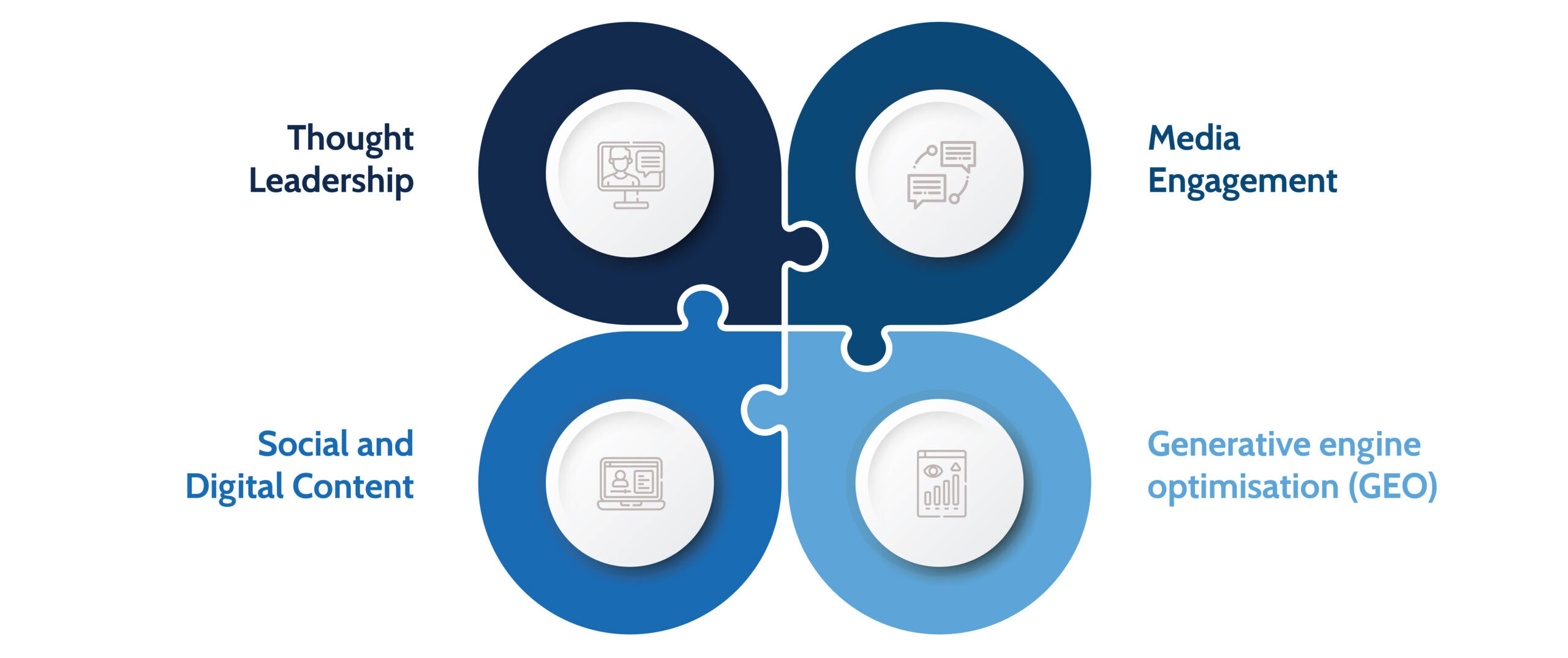
1. Thought leadership
Thought leadership turns expertise into a clear, consistent narrative that addresses buyer challenges and industry change. Through whitepapers, outlook reports, executive commentary, and webinars, brands develop authoritative content that builds trust and credibility, and improves discoverability for audiences and AI search engines alike.
Over time, this becomes a library of references that positions your organisation as a reliable source of insight.
2. Media engagement
Media placements in respected outlets provides valuable third-party validation. When your brand or leaders appear in established publications, podcasts, or digital platforms, you gain more than reach; you gain brand credibility.
AI tools favour reliable and reputable sources when pulling information into automated summaries. A consistent media presence increases the chance of appearing in high-visibility search moments. Media activity is therefore not only beneficial for human awareness, but also essential for algorithmic recognition.
3. Social and digital content
On social platforms, storytelling becomes episodic, participatory, and community-driven. Brands such as Humans of New York show how authentic, ongoing narratives create emotional loyalty and sustained engagement.
AI technology supports hyper-personalised content delivery in real time by segmenting audiences and surfacing relevant messages at scale. This allows brands to maintain continuous visibility while deepening connection through meaningful, human-centred stories.
4. Generative engine optimisation (GEO)
GEO creates the technical foundation that enables AI systems to find, interpret, and cite brand content accurately. Structuring content with clear headings, FAQs, schema-friendly language, and consistent messaging helps algorithms attribute information correctly.
The goal is shifting from ranking for clicks to being recognised as a trusted, AI-endorsed source that appears within summaries, briefings, and conversational search results.
The impact of storytelling on credibility and engagement
When stories resonate emotionally and pull at the heart strings, they boost brand credibility and foster deeper engagement. Well-crafted narratives build trust, drive audience loyalty, and encourage brand advocacy. Meanwhile, media coverage and third-party validation reinforce this trust in your brand and reduce buyer hesitation.
By combining emotional engagement and external credibility, storytelling becomes a strategic investment. It helps brands build meaningful connections with their audience and strengthens their position in a marketplace shaped by AI: a space where visibility, relevance, and trust matter more than ever.
A practical framework for integrating storytelling into media strategy
Effective storytelling doesn’t happen by accident; it requires intentional structure, alignment, and consistency across channels. This framework helps brands transform fragmented content into a unified narrative system that supports long-term visibility.
By applying these steps, organisations can create stories that are not only memorable for people, but also recognisable and retrievable for AI systems — ultimately strengthening trust, credibility, and market presence in an increasingly competitive digital landscape.
1. Clarify your brand story
Define mission, values, voice, and the real challenges of your audience. Authenticity remains essential.
2. Understand audience narratives
Use data and AI tools to learn what buyers are asking for in digital and AI-generated channels. Speak to their goals and pain points specifically.
3. Build a story ecosystem
Develop aligned narratives across thought leadership, media, and social content. Consistency creates a recognisable brand presence across different touchpoints.
4. Optimise for AI discovery
Apply GEO principles to structure content clearly. Use headings, FAQs, citations, and relevant data to support AI attribution.
5. Measure, adapt, and scale
Track engagement, sentiment, media citations, and AI visibility. Use insights to refine and replicate what works.
In an AI-led marketing world, storytelling isn’t just a ‘nice to have’ – it’s an essential marketing strategy and part of what we call the ‘Golden Triangle’. By blending genuine human stories with AI smarts, brands can build genuine clarity, credibility, and connection for their audiences and customer base.
Manning & Co. partners with leading businesses to craft authentic and relatable brand-building strategies and meaningful brand stories for real impact. Ready to invest more in your brand story telling? Find out how with us.